

Rabbits are not the silent, simple creatures they are often perceived to be. They are complex, social animals with a rich and nuanced language of their own. While they may not bark or meow, they communicate volumes through a combination of body language, subtle vocalizations, and specific behaviors. Understanding this “rabbit language” is the key to building a strong, trusting bond with your furry companion and ensuring their well-being. This guide will help you translate what your rabbit is trying to tell you.
1. The Language of Posture and Body
A rabbit’s posture is one of its most expressive tools. By observing how they hold themselves, you can get a good sense of their mood.
– Standing on Hind Legs (“Periscoping”): This is a sign of curiosity and alertness. Your rabbit is trying to get a better vantage point to see what’s going on around them. They are investigating their environment.
– Flattening (The “Bunny Rug”): When a rabbit presses its stomach to the ground with its ears back, it’s often a sign of fear or a desire to not be noticed. They are trying to make themselves as small as possible. However, if they are relaxed and their legs are stretched out behind them, it’s a sign of contentment.
– The “Loaf” Position: A rabbit that is sitting with all four paws tucked underneath its body, looking like a loaf of bread, is relaxed and comfortable. They feel safe enough to be in a position from which they cannot immediately run away.
– Ear Position:
– Ears Forward: Alert, curious, or interested.
– Ears Back: Can indicate fear, anger, or aggression.
– One Ear Forward, One Back: A state of uncertainty or mixed feelings.
2. Vocalizations: More Than Just Silence
While generally quiet, rabbits do make sounds to communicate specific feelings.
– Grunting/Growling: A low, guttural sound often accompanied by a lunge. This is a clear sign of anger or feeling threatened. Give your rabbit space.
– Tooth Purring: A soft, rhythmic grinding of the teeth that can be felt more than heard when you are petting your rabbit. This is the rabbit equivalent of a cat’s purr and signifies extreme contentment and pleasure.
– Loud Tooth Grinding: A much louder, harsher sound that is a sign of severe pain or distress. This requires immediate veterinary attention.
– Honking: A soft, repeated sound usually made by an un-neutered male courting a female. It’s a sign of excitement and desire.
– Screaming: A piercing, high-pitched scream is a sound of pure terror or extreme pain. This is an emergency signal.
3. Decoding Key Behaviors
Now let’s look at some of the most common and important behaviors you’ll see.
– The Thump: When a rabbit stomps one or both hind feet loudly on the ground, it’s a warning signal. In the wild, this alerts other rabbits to danger. In a domestic setting, it can mean your rabbit is frightened, annoyed, or disapproving of something you or another pet has done.
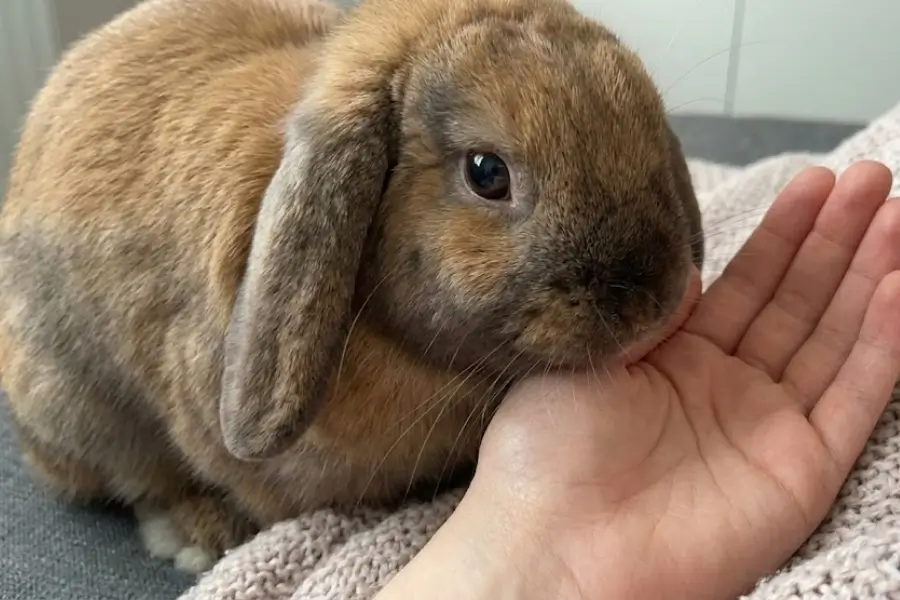
– The Nudge or Nose-Bump: This is a polite and common way for a rabbit to say, “Hey, pay attention to me!” It can be a request for petting, a treat, or simply to be acknowledged. It can also be a way of saying “Excuse me, you’re in my way.”
– The Binky: This is the most joyful behavior a rabbit can perform. A binky is a high jump into the air, often accompanied by a twist of the body and a kick of the hind legs. It is an unmistakable sign of pure happiness, playfulness, and high spirits.
– Grooming and Licking: If your rabbit licks you, it’s a huge compliment! It means they have accepted you as one of their own and are showing you affection. Grooming is a major social bonding activity for rabbits.
– Chinning: Rabbits have scent glands under their chins. When they rub their chin on items (or people), they are marking their territory. It’s their way of saying, “This is mine.”
– Circling: When a rabbit runs in circles around your feet, it’s often a courting behavior, sometimes accompanied by soft honking. It’s a sign of affection and excitement, but can also be a hormonal behavior in un-neutered rabbits.
Conclusion
Learning to read your rabbit’s language takes time and observation, but it is an incredibly rewarding process. By paying attention to their posture, sounds, and behaviors like thumping, nudging, and binkying, you can gain a deeper understanding of their world. This knowledge allows you to respect their boundaries, respond to their needs, and build a relationship based on trust and mutual affection. The next time your rabbit gives you a gentle nudge or performs a spectacular binky, you’ll know exactly what they’re saying!












0 Comments