
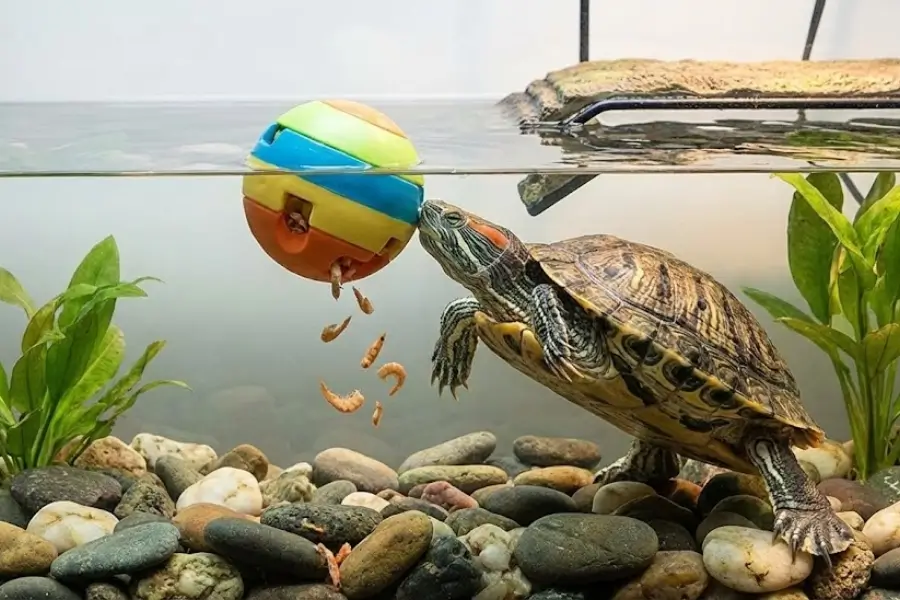
It’s a common misconception that because reptiles like turtles have a slower pace of life, they don’t experience boredom. The truth is, turtles are intelligent creatures with natural instincts to forage, explore, and investigate their surroundings. In the wild, their days are filled with the challenges of finding food, navigating their environment, and avoiding predators. When placed in a static, unchanging captive environment, these natural behaviors are suppressed, leading to a state of chronic boredom and stress.
This article will delve into the world of turtle enrichment, explaining why it’s crucial for their physical and mental well-being, how to recognize signs of boredom, and providing practical, fun ideas to enrich your turtle’s life.
Signs of a Bored Turtle
A bored turtle isn’t just a calm turtle. A lack of mental stimulation can manifest in various ways, some of which can be detrimental to their health:
– Lethargy: While turtles do spend time basking and resting, excessive inactivity and a lack of interest in their surroundings can be a sign of boredom.
– Stereotypic Behaviors: These are repetitive, purposeless movements, such as constant pacing along the enclosure walls, persistent glass-surfing (trying to climb the glass), or repetitive digging in the same spot.
– Lack of Appetite: A bored or stressed turtle may lose interest in food.
– Destructive Behavior: Some turtles may take out their frustration on their enclosure, rearranging decor or even damaging it.
The Power of Enrichment: How to Engage Your Turtle
Enrichment is the process of improving an animal’s environment to stimulate their mind and body, encouraging natural behaviors. It’s not about expensive toys; it’s about creativity and understanding your pet’s needs. Enrichment can be broken down into several categories:
1. Food-Based Enrichment
In the wild, turtles spend a significant portion of their day searching for food. In captivity, a bowl of pellets is delivered with zero effort. You can make mealtime a fun challenge!
– Puzzle Feeders: As seen in the featured image, a floating or sinking puzzle ball can make your turtle work for their treats. They have to nudge, push, and manipulate the object to release the food, mimicking foraging behavior.
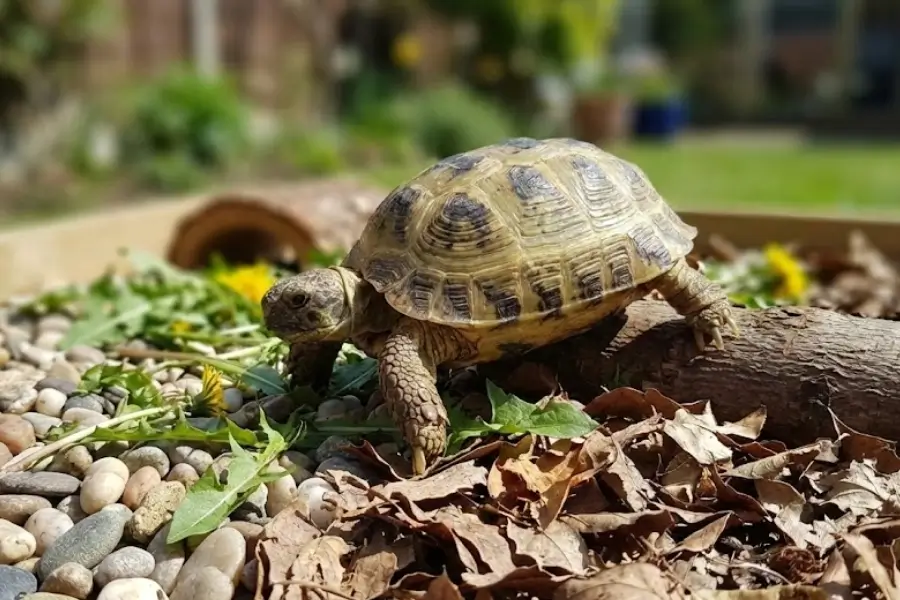
– Foraging Toys: Hide food in safe, non-toxic objects like a hollow log, a pile of large river stones, or even a dedicated foraging mat for tortoises.
– Live Prey (For Appropriate Species): For aquatic turtles, offering live feeder fish or ghost shrimp once in a while can stimulate their natural hunting instincts. Always ensure the prey is safe and healthy.
– Vary the Diet: Introduce new textures and flavors. Offer different types of leafy greens, vegetables, and safe fruits. The novelty itself is enriching.
2. Environmental Enrichment
A static environment is a boring one. You can make your turtle’s home more exciting by making simple changes.
– Rearrange the Furniture: Every time you do a deep clean, change the layout of the tank or enclosure. Move the basking dock, rearrange the rocks, or add a new hiding spot. This encourages exploration.
– Introduce New Textures: As shown with the tortoise above, providing different substrates like smooth stones, safe mulch, leaf litter, or a patch of reptile-safe moss can be very stimulating for terrestrial species. For aquatic turtles, add different types of aquatic plants (real or silk) or river stones of various sizes.
– Create a Safe “Playpen”: For tortoises and some semi-aquatic turtles, a supervised outdoor or indoor play area can provide a wealth of new sights, smells, and textures. Ensure the area is escape-proof, free of pesticides, and safe from predators.
– Add Verticality: Many turtles, even some aquatic ones, enjoy climbing. A securely placed piece of driftwood or a ramp can add a new dimension to their world.
3. Sensory and Cognitive Enrichment
Engage your turtle’s senses of sight, smell, and touch.
– Novel Objects: Introduce a new, safe object into their enclosure for a short period, like a brightly colored (non-toxic) ball or a floating rubber duck for aquatic turtles. They will investigate it.
– Scent Trails: For tortoises, you can create a scent trail with a favorite food item, leading them on a little adventure around their enclosure.
– Visual Stimulation: Place their enclosure in a room with some activity, but not so much that it causes stress. They might enjoy watching people or other pets from a safe distance. You can even place a tablet near the tank and play videos of fish or nature scenes for short periods.
Conclusion
Enrichment is not a luxury; it’s a necessity for the welfare of captive reptiles. By understanding your turtle’s natural behaviors and providing them with opportunities to forage, explore, and problem-solve, you can significantly improve their quality of life. A stimulated turtle is a happier, healthier, and more active companion. So, get creative and start enriching your turtle’s world today!











0 Comments