
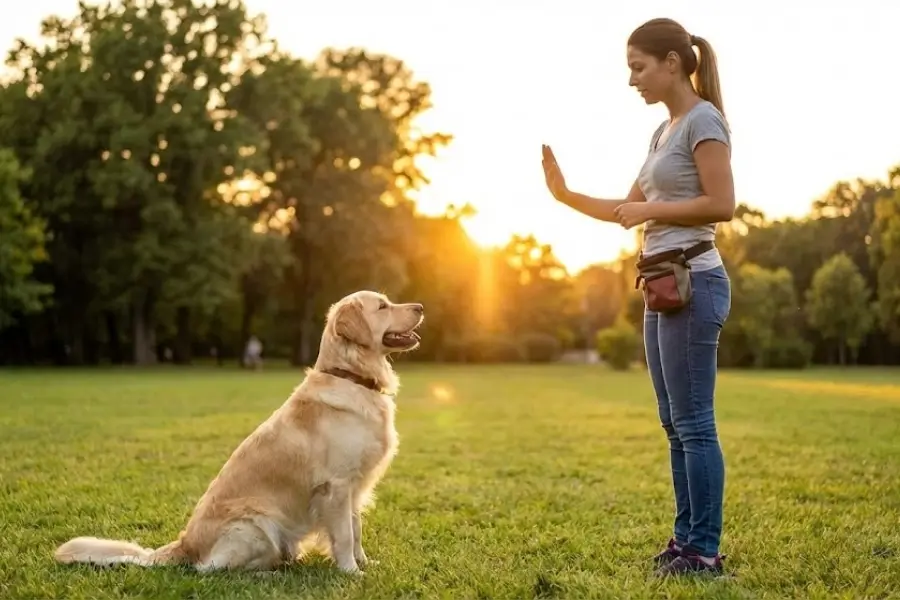
The “Stay” command is one of the most useful and foundational skills you can teach your dog. It’s a key safety command, preventing your dog from bolting out the door or approaching a dangerous situation. It’s also fantastic for building impulse control and setting clear boundaries. You don’t need hours of practice; with the right technique and high-value treats, you can teach your dog the foundation of “Stay” in just one short, focused session.
The Foundation: Mastering “Sit” or “Down” First
Before you can teach “Stay,” your dog needs to know how to hold a stationary position, such as “Sit” or “Down.” The “Stay” command simply lengthens the duration of that position. Ensure your dog can reliably “Sit” on command in a quiet environment before moving on.
– Essential Gear: High-value treats (small, soft, and enticing), a quiet room, and a positive attitude.
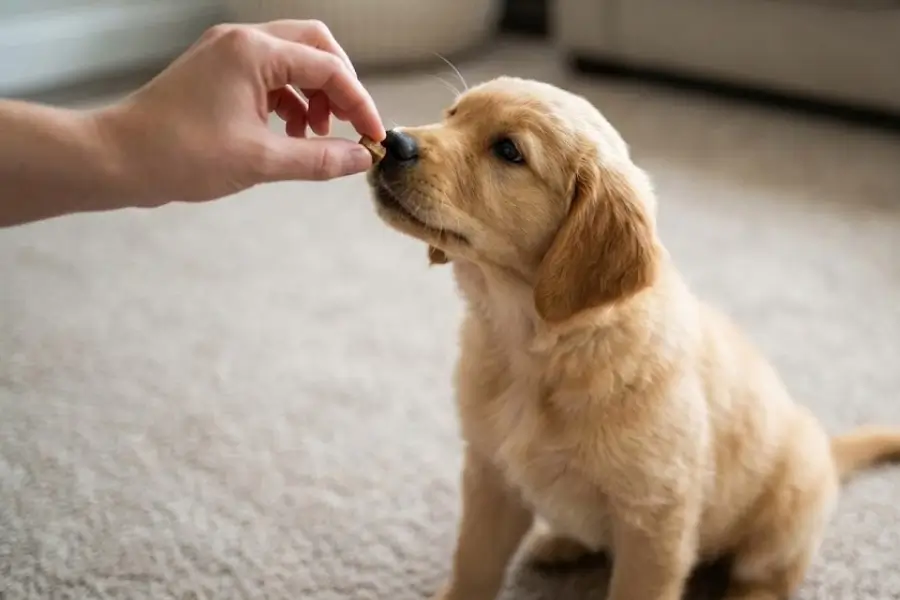
Step 1: The Initial Position and Hand Signal (1 Minute)
Start by getting your dog into a “Sit” position right in front of you.
– Give the “Stay” Cue: Once they are sitting, say the command “Stay” in a calm, clear voice.
– Introduce the Hand Signal: Immediately after saying “Stay,” present a clear hand signal. The standard signal is holding the palm of your hand facing your dog, like a stop sign. This dual cue (verbal and visual) helps your dog learn faster.
– Reward Immediately: After the signal, count to one second in your head, then quickly give your dog a high-value treat right where they are sitting. Do not use the release cue yet.
Step 2: Increasing Duration in Position (2 Minutes)
The next step is to increase the amount of time they have to hold the position before the reward comes.
– Repeat and Increase Time: Repeat Step 1, but this time, count to three seconds before giving the treat.
– Maintain Position: If your dog breaks the stay, simply restart the process. Do not punish; just lure them back into a “Sit,” say “Stay,” and try again.
– Introduce the Release Cue: Once they can hold the three-second “Stay” reliably, introduce a release word. A clear, happy word like “OK!” or “Break!” signals they are free to move. When you say the release word, throw a treat a step away so they must move to get it. This clearly ends the exercise.
Step 3: Taking a Small Step Back (1 Minute)
Now you will introduce distance, which is often the hardest part for a dog.
– One Step Back: Get your dog into the “Sit-Stay” position. Take just one small step back, hold the “Stay” for three seconds, quickly step back to your dog, give the treat, and then give the release cue.
– Two Steps Back: Repeat the process, taking two steps back. Remember to always return to your dog to deliver the reward, reinforcing that the reward comes for holding the position. If they break the stay, go back to just a one-second stay with no distance.
Step 4: Practice and Proofing (1 Minute)
Keep your sessions short, fun, and highly rewarding. The goal is to finish the session before your dog gets bored or frustrated.
– Practice Short Sessions: Practice “Stay” a few times a day for just a few minutes at a time.
– Gradually Increase Distractions: Once your dog is proficient, begin practicing in slightly more distracting environments, like a different room or near a closed door. Always revert to a shorter duration and less distance when adding new distractions.
Conclusion
You can successfully teach the basics of “Stay” in under five minutes using this method. The secret is the speed and value of the reward. By consistently rewarding your dog for holding the position, you build a positive association with the command, making it a reliable and enjoyable skill for both of you.











0 Comments