

Bringing a new bird into your home is an exciting commitment, but the transition must be handled with care, especially if you already have birds. Birds are highly territorial and sensitive to change. A sudden introduction can result in stress, behavioral issues, and the tragic spread of disease. The key to success is a slow, methodical process that prioritizes health, security, and gradual familiarization.
1. The Non-Negotiable Quarantine Period
Quarantine is the most important step for health and safety, and it serves as the newcomer’s initial adjustment period.
– Separate Room: The new bird must be housed in a separate cage in a different room, ideally one where they cannot see or touch existing birds. The physical separation minimizes disease transmission.
– Duration: Maintain quarantine for a minimum of 30 days.
– Veterinary Screening: Schedule a thorough check-up with an avian veterinarian during the quarantine period, including blood work and fecal testing, to ensure the bird is free of contagious diseases before any interaction with your current flock.
– Observation: Use this time to observe the new bird’s appetite, droppings, behavior, and energy levels for any subtle signs of illness.
2. Building Trust and Establishing Routine
Use the quarantine period to bond with the new bird and establish predictability.
– Create a Sanctuary: The quarantine room should be quiet and safe. Place the cage against a wall to provide security.
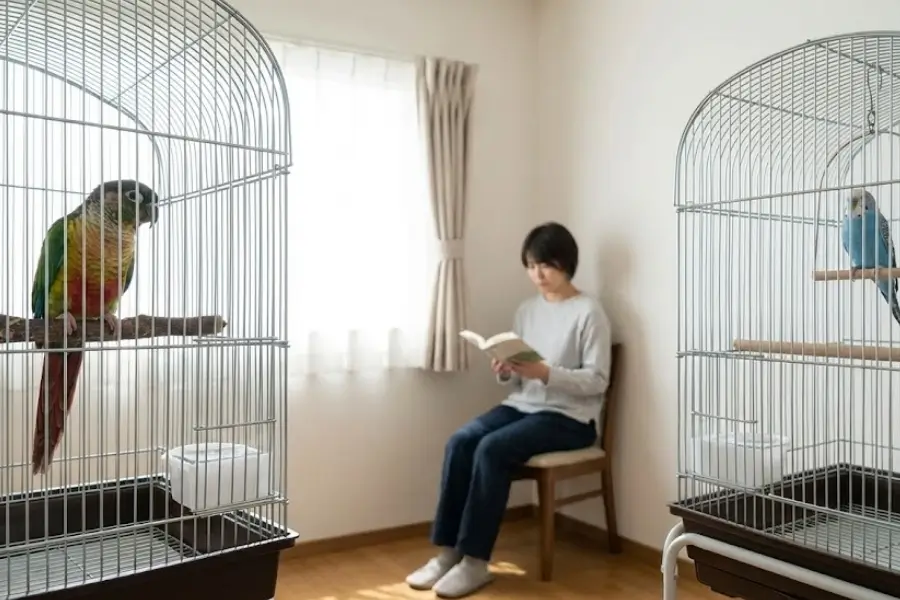
– Quiet Time and Talk: Spend quiet time sitting near the cage, speaking softly, or reading. This helps the bird become comfortable with your presence and voice without feeling threatened.
– Positive Association: Use their favorite high-value treats to encourage them to approach you. Gradually work towards taking treats from your hand.
– Consistent Schedule: Immediately establish a routine for feeding, sleeping, and playtime. Predictability is vital for a bird’s sense of security.
3. Scent and Sound Familiarization (Without Visuals)
After the initial health check, you can begin the introduction process using their other senses.
– Shared Sounds: After a week or two, you can move the cages closer so the birds can hear each other, perhaps through a closed door. Hearing the sounds of other birds is often comforting.
– Scent Swapping: Once the birds are calm, swap a blanket, perch, or toy between the two cages. This allows them to get used to the scent of the “stranger” associated with familiar objects.
– Room Swapping: Allow the new bird short, supervised visits in the resident bird’s cage area (while the resident is safely contained elsewhere) and vice-versa. This deepens scent exposure without direct contact.
4. The Controlled, Supervised Meeting
Only introduce them visually once both birds are healthy and appear calm when hearing and smelling each other.
– Neutral Territory: The first visual meeting should take place in a room that neither bird views as their territory (e.g., a spare room or a play area).
– Cages Side-by-Side: Start by placing the two cages side-by-side but not touching. Supervise closely. Look for positive behaviors like preening or feeding.
– Supervised Free Time: If they remain calm, allow them out for supervised free flight on separate play stands. Use treats and toys to keep the environment positive and distracting.
Conclusion
Introducing a new bird is a process that can take weeks or even months. Patience is paramount. By adhering strictly to the quarantine protocol and implementing gradual, positive introductions, you reduce stress and increase the likelihood that your new bird will be happily accepted into the flock.










0 Comments