
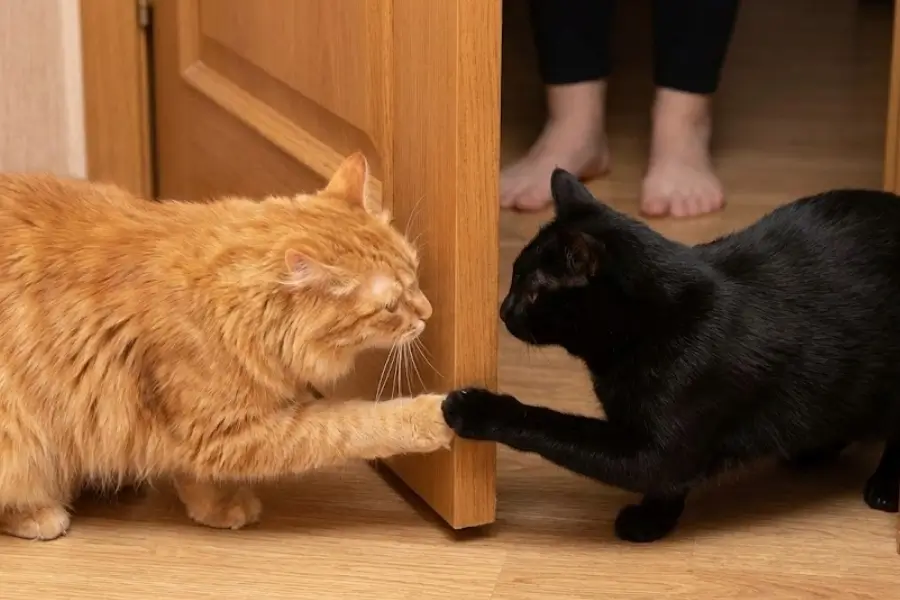
The decision to bring a new cat home when you already have a resident feline is wonderful, but the introduction process is often where things go wrong. Cats are territorial, and a sudden, uncontrolled meeting can result in stress, fighting, and a fractured relationship that may never heal. The key to success is patience and a gradual, scent-based introduction that respects both cats’ need for territory and security.
Step 1: The Essential Sanctuary (Quarantine and Scent Collection)
The entire process must begin with a period of separation.
– Set Up the Safe Room: Prepare a dedicated “safe room” (spare bedroom or large bathroom) for the new cat before they arrive. Equip it with food, water, a litter box, a bed, and toys. This room is the newcomer’s sanctuary.
– Immediate Separation: Upon arrival, place the new cat directly into this safe room. This gives the newcomer a secure space to decompress from the stress of the move without immediately facing a threat (the resident cat).
– Quarantine: Keep the new cat completely separate for at least 7-10 days, allowing them to adjust. The resident cat should not have access to this room.
Step 2: The “Invisible” Introduction (Scent Swapping)
Scent is the most important sense for cats. They must get used to each other’s smell before seeing each other.
– Scented Towels: Take a blanket or towel that the new cat has slept on and place it in the resident cat’s territory (e.g., near their food bowl). Do the same with the resident cat’s bedding, placing it in the safe room.
– Positive Association: When the cats investigate the new scent, reward them with praise or a high-value treat. This teaches them that the smell of the other cat is associated with good things.
– Room Swapping: Once they seem calm about the swapped bedding, allow each cat supervised access to the other’s room for short periods while the other cat is safely contained. This deepens the scent introduction without face-to-face contact.

Step 3: Sight and Sound (The Barrier Method)
Once they are comfortable with each other’s scent, introduce sight and sound while maintaining a physical barrier.
– Mealtime by the Door: Feed both cats on opposite sides of the closed safe room door. Gradually move their food bowls closer to the door with each meal. Associating the other cat’s presence with the reward of food is a powerful tool.
– Visual Access: Once they eat calmly right next to the door, introduce a barrier like a tall baby gate or a screen door. This allows them to see and sniff each other without physical fighting. Keep initial visual sessions short and calm.
Step 4: Supervised Physical Meetings
Only move to this step when both cats show calm, non-aggressive behavior (no hissing, growling, or intense staring) through the barrier.
– Short and Positive: Start with very short, supervised face-to-face meetings in a neutral room. Keep high-value treats and toys handy to distract them and maintain a positive atmosphere.
– End on a High Note: End the session *before* either cat becomes agitated. It is crucial that the cats associate the end of the meeting with a positive or neutral state, not with a fight.
– Gradual Increase: Slowly increase the duration of these supervised sessions over the course of several days or weeks.
Conclusion
Introducing two cats requires immense patience. It is a process that can take weeks or even months, depending on the cats’ personalities. Never rush the process or force interaction. By adhering to a slow, scent-based approach and prioritizing positive reinforcement, you maximize the chance that your resident cat and your new arrival can establish a harmonious and peaceful relationship.














0 Comments