

Building a bond with your pet rat or mouse is one of the most rewarding aspects of owning these intelligent and social creatures. A strong bond rests on a foundation of trust, and that trust is built through safe, gentle, and positive interactions. This guide will walk you through the essential techniques for handling and bonding with your new small friend, ensuring a happy and confident pet.
1. The “Settling-In” Period: Patience is Key
Before you even attempt to handle your new pet, it’s crucial to give them time to adjust to their new home. This “settling-in” period should last for at least 24-48 hours. During this time, keep their environment quiet and refrain from trying to touch them. Instead, sit by their cage and speak to them softly so they can get used to your presence and voice. You can also offer a small treat through the bars to create a positive association with you.
2. Understanding Their Body Language
Knowing how your pet is feeling is the first step to safe handling.
– Relaxed and Curious: A rat or mouse that is ready to interact will be inquisitive, coming to the cage door with its ears forward and whiskers twitching. It may stand on its hind legs to get a better look at you.
– Fearful or Stressed: A scared animal will often freeze, try to hide, or flatten its body against the cage floor. Its ears may be pinned back, and its eyes might look wide and bulging. Never try to force interaction with a fearful animal; give them space and try again later.
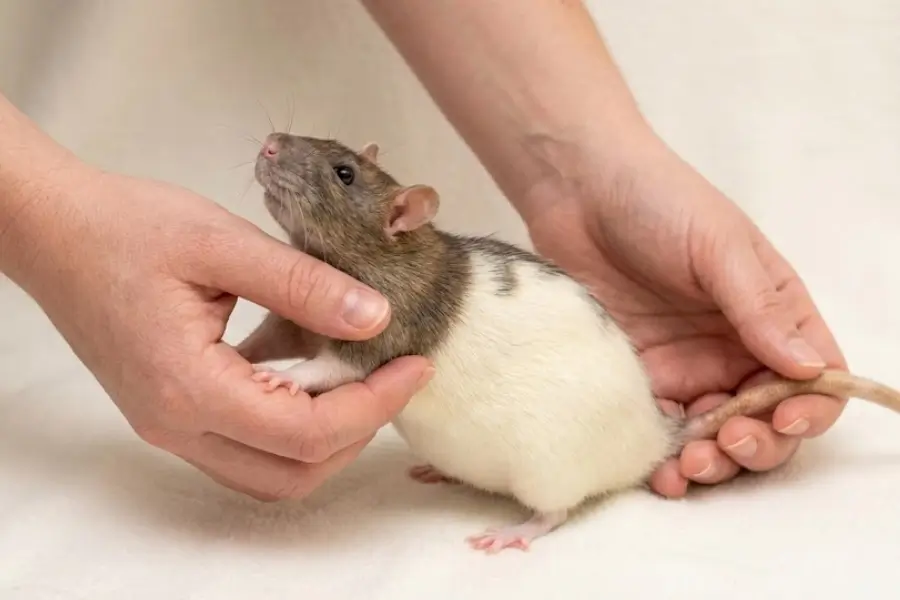
3. Safe Handling Techniques for Rats
Rats are generally more robust and easier to handle than mice, but they still require a gentle touch. The most important rule is to never pick a rat up by its tail. This is painful and can cause serious injury, including “degloving,” where the skin of the tail is stripped away.
The Scoop Method: This is the safest and most common way to pick up a rat.
– Place one hand gently under the rat’s chest, just behind its front legs.
– Use your other hand to scoop up its hindquarters and tail, supporting its entire body weight.
– Hold the rat close to your chest, which will make it feel secure.
Once your rat is comfortable with being held, many enjoy “shoulder rides.” You can encourage them to walk from your hand onto your shoulder. Always be mindful of where they are and move slowly to prevent them from falling.
4. Safe Handling Techniques for Mice
Mice are smaller, faster, and more fragile than rats, so they require extra care. Like rats, you should never pick a mouse up by the tip of its tail. However, you can gently grasp the very base of the tail (closest to the body) to lift them for a second while you place your other hand underneath for support.
The Cupping Method:
– Place one hand flat on the cage floor, palm up.
– Use your other hand to gently guide the mouse onto your palm.
– Once the mouse is in your hand, cup your other hand over it to prevent it from jumping.
The Tube Method:
This is an excellent technique for timid or fast mice.
– Place a toilet paper tube or a small cardboard box inside their cage.
– Wait for the mouse to investigate and crawl inside.
– Gently cover the ends of the tube with your hands and lift it out of the cage. You can then let the mouse walk out onto your hand or into a play area.
5. Bonding Activities
Bonding is an ongoing process that should be fun for both of you.
– Treats and Hand-Feeding: This is one of the most effective ways to build trust. Offer small, high-value treats like a piece of plain cooked chicken, a sunflower seed, or a dab of yogurt from your fingers. This teaches them that your hands are a source of good things.
– “Free Roam” Time: Create a safe, escape-proof play area (like a large playpen or a blocked-off hallway) where you can sit with your pets. Let them explore at their own pace and climb on you. This is a great opportunity for them to get used to your scent and presence in a fun, non-threatening environment.
– Grooming: Many rats enjoy being gently stroked or “groomed” with a soft toothbrush. This mimics the social grooming they do with each other and can be a very bonding experience.
By following these safe handling techniques and dedicating time to positive bonding activities, you’ll be well on your way to a strong and loving relationship with your pet rat or mouse. Remember, patience is your best tool. Let your pet set the pace, and always end every interaction on a positive note.














0 Comments