
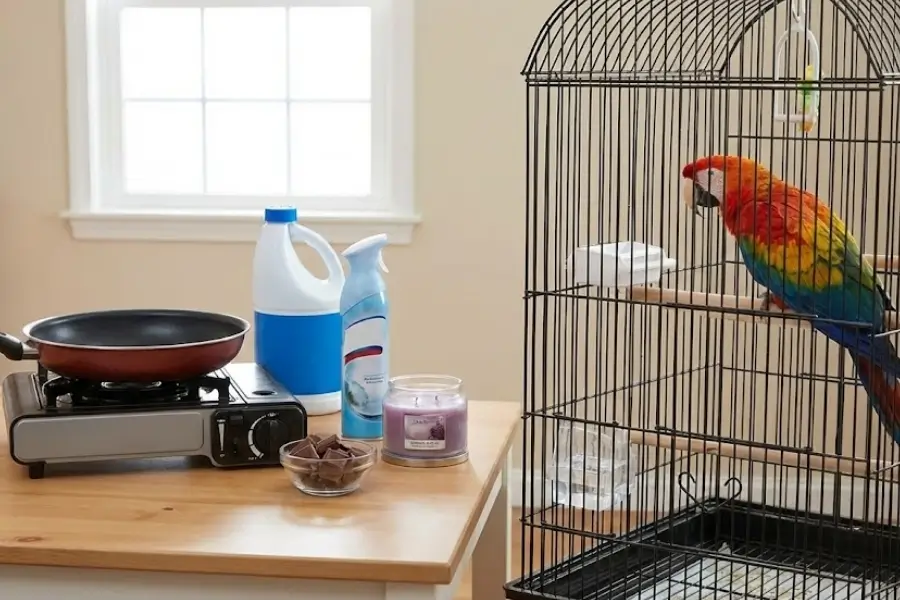
Birds are uniquely susceptible to household toxins due to their highly efficient respiratory systems. Designed to rapidly absorb oxygen for flight, their lungs absorb airborne toxins at a much higher rate than humans or mammals. What is safe for you can be instantly fatal to your feathered friend. Bird-proofing your home by identifying and eliminating these hidden dangers is a critical part of responsible bird ownership.
1. Kitchen Hazards: The Silent Killers
The kitchen is arguably the most dangerous room in the house for a bird.
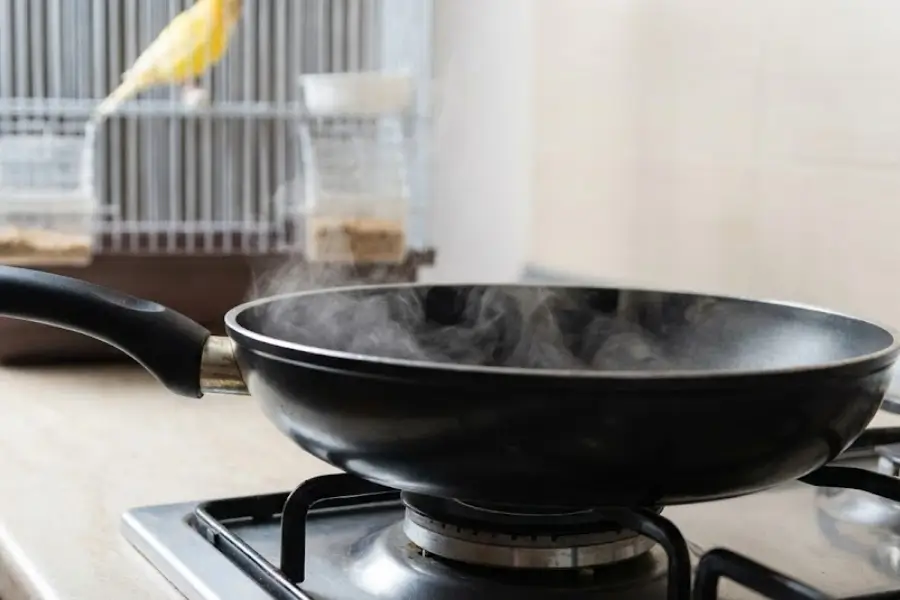
– Non-Stick Cookware (Teflon/PTFE): When overheated (usually above 500°F/260°C), non-stick surfaces release invisible, odorless fumes that cause “Teflon toxicity” or Polymer Fume Fever. These fumes cause the bird’s lungs to hemorrhage, leading to rapid death.
– Prevention: Never use non-stick cookware, baking sheets, or even self-cleaning oven cycles in a bird home. Switch entirely to stainless steel, cast iron, or ceramic.
– Toxic Foods: Foods like **avocado** (contains persin, toxic to bird hearts), **chocolate** (contains theobromine), **caffeine**, **onions**, and **garlic** (damages red blood cells) must be kept strictly out of reach.
2. Air Quality and Aerosol Dangers
Birds are highly vulnerable to volatile organic compounds (VOCs) and aerosolized chemicals.
– Aerosol Sprays: Hairspray, deodorants, air fresheners, furniture polish, and cleaning sprays can cause severe respiratory irritation and even death. Do not use these products near your bird.
– Scented Products: Scented candles, plug-in air fresheners, essential oil diffusers, and incense release VOCs that are harmful to avian lungs. Avoid using them in the same room as your bird.
– Cleaning Products: Fumes from bleach, ammonia, oven cleaners, and floor polish can cause chemical burns in a bird’s respiratory tract. Use bird-safe, natural cleaners and ensure maximum ventilation whenever cleaning is done.
– Smoke: Second-hand smoke (cigarettes, cigars, vaping devices) is highly irritating and toxic to birds, leading to chronic respiratory diseases.
3. Heavy Metal Poisoning
Birds explore with their beaks and can easily chip off and ingest minute amounts of toxic metals.
– Lead Sources: Lead paint (in older homes), lead solder on stained glass, curtain weights, fishing weights, and some cheap costume jewelry.
– Zinc Sources: Galvanized wire, nuts, bolts, and hardware on cages and toys, as well as pennies minted after 1982.
– Symptoms: Symptoms of heavy metal poisoning can include lethargy, vomiting, seizures, and increased thirst. **Action:** If you suspect ingestion, contact your avian veterinarian immediately, as this is a medical emergency.
4. Other Hidden Hazards
– Houseplants: Many common houseplants are toxic if chewed or ingested, including dieffenbachia, philodendron, lilies, and poinsettias. Research every plant and keep toxic ones out of the bird’s reach.
– Medications: Human medicines, even common pain relievers like Tylenol or ibuprofen, are highly toxic to birds and must be securely stored.
– Water Hazards: Open toilets, uncovered boiling pots on the stove, or full sinks pose a drowning or scalding risk to free-flying birds.
Conclusion
Bird-proofing requires constant vigilance. By eliminating non-stick products, strictly controlling air quality, and removing sources of heavy metals, you are creating the safest possible environment for your delicate feathered companion.









0 Comments