

Our dogs are part of the family, and it’s natural to want to share our meals with them. While a small piece of chicken or a carrot stick might seem harmless, many common human foods can be toxic or dangerous for dogs. Understanding which foods are safe and which are off-limits is crucial for your dog’s health and safety. Always err on the side of caution and consult your veterinarian if you’re unsure about a particular food or if your dog has ingested something questionable.
Safe Human Foods (in Moderation)
These foods can be offered as occasional treats, assuming your dog doesn’t have any allergies or dietary sensitivities. Always offer in small, plain portions, cooked if applicable, and without seasonings, butter, or oils.
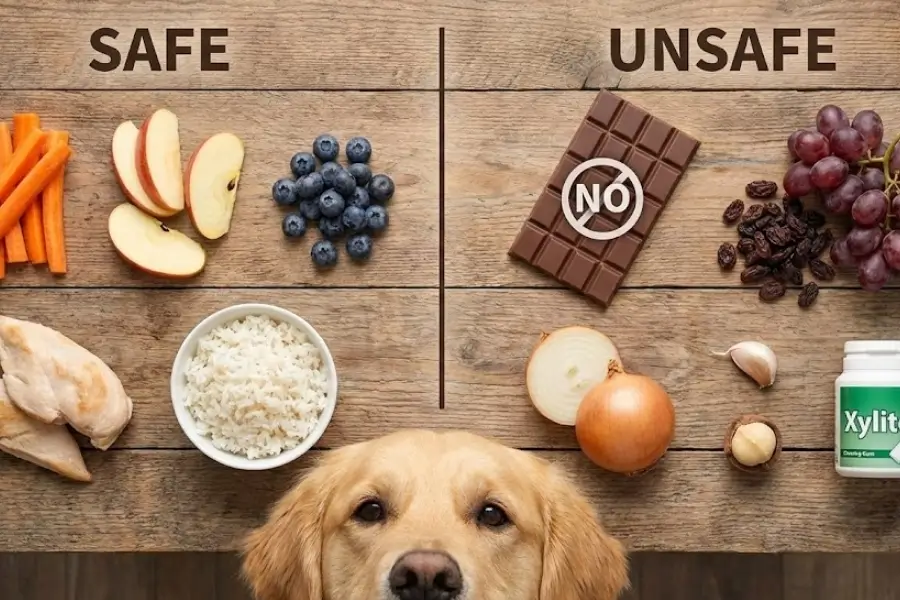
– Lean Meats: Cooked chicken, turkey, beef, or salmon (skinless, boneless, plain) are excellent sources of protein. Avoid processed meats like bacon or ham due to high fat and sodium.
– Carrots: Great for dental health, low in calories, and a good source of vitamins.
– Green Beans: A healthy, low-calorie snack, rich in vitamins K and C, and manganese.
– Apples: (Without seeds!) A good source of vitamins A and C, and fiber. Apple seeds contain cyanide and must be removed.
– Bananas: High in potassium, vitamins, and fiber. Give in small amounts due to sugar content.
– Blueberries: Packed with antioxidants.
– Watermelon: (Seedless and rind removed!) Hydrating and a good source of vitamins A, B6, and C.
– Sweet Potatoes: Cooked (boiled or baked, plain) are a good source of vitamins, fiber, and complex carbohydrates.
– Plain Rice or Pasta: Cooked plain, in moderation, can be good for an upset stomach.
– Peanut Butter: (Xylitol-free!) A popular treat, but ensure it contains no xylitol, which is highly toxic to dogs. High in fat, so offer sparingly.
Unsafe Human Foods (Toxic or Dangerous)
These foods should never be given to your dog, even in small amounts.
– Chocolate: Contains theobromine, which is highly toxic. Dark chocolate and baking chocolate are the most dangerous. Symptoms range from vomiting and diarrhea to seizures and death.
– Grapes and Raisins: Can cause acute kidney failure in dogs. The exact toxic agent is unknown, and even small amounts can be dangerous.
– Xylitol: An artificial sweetener found in many sugar-free products (gum, candies, peanut butter, toothpaste). It causes a rapid release of insulin, leading to dangerously low blood sugar (hypoglycemia), liver failure, and death.
– Onions, Garlic, Leeks, Chives: All members of the Allium family. They contain compounds that can damage red blood cells, leading to anemia. Garlic is considered more potent than onion.
– Avocado: Contains persin, which can be toxic to dogs in large amounts, causing vomiting and diarrhea. The pit also poses a choking hazard.
– Alcohol: Can cause intoxication, vomiting, diarrhea, central nervous system depression, tremors, coma, and even death.
– Macadamia Nuts: Can cause weakness, tremors, vomiting, fever, and central nervous system depression.
– Cooked Bones: Cooked bones become brittle and can splinter, causing choking, internal punctures, or blockages. Raw bones can be safer, but still carry risks; discuss with your vet.
– Caffeine: Found in coffee, tea, and energy drinks. Can cause restlessness, rapid breathing, heart palpitations, and muscle tremors.
– Yeast Dough: Can rise in your dog’s stomach, causing painful bloating and potentially twist the stomach (bloat), a life-threatening condition. The yeast also produces alcohol.
– Salt: Large amounts can lead to sodium ion poisoning, causing vomiting, diarrhea, tremors, seizures, and death.
– High-Fat Foods: Foods like bacon, gravies, and fatty cuts of meat can cause pancreatitis, a painful inflammation of the pancreas.
What to Do If Your Dog Eats Something Toxic
If you suspect your dog has eaten a toxic food, act immediately:
– Contact Your Veterinarian: Call your vet or an emergency veterinary clinic right away.
– Contact Pet Poison Helpline: Keep the numbers for pet poison control centers handy (e.g., ASPCA Animal Poison Control Center or Pet Poison Helpline).
– Provide Information: Tell them what your dog ate, approximately how much, and when. Describe any symptoms your dog is showing. Do NOT induce vomiting unless specifically instructed to do so by a professional.
Conclusion
While sharing food with your dog can strengthen your bond, it’s vital to be informed about what’s safe and what’s not. Stick to dog-specific treats or veterinarian-approved human foods in moderation. When in doubt, it’s always best to keep human food out of paw’s reach and consult with your vet to ensure your furry friend stays healthy and happy.








0 Comments